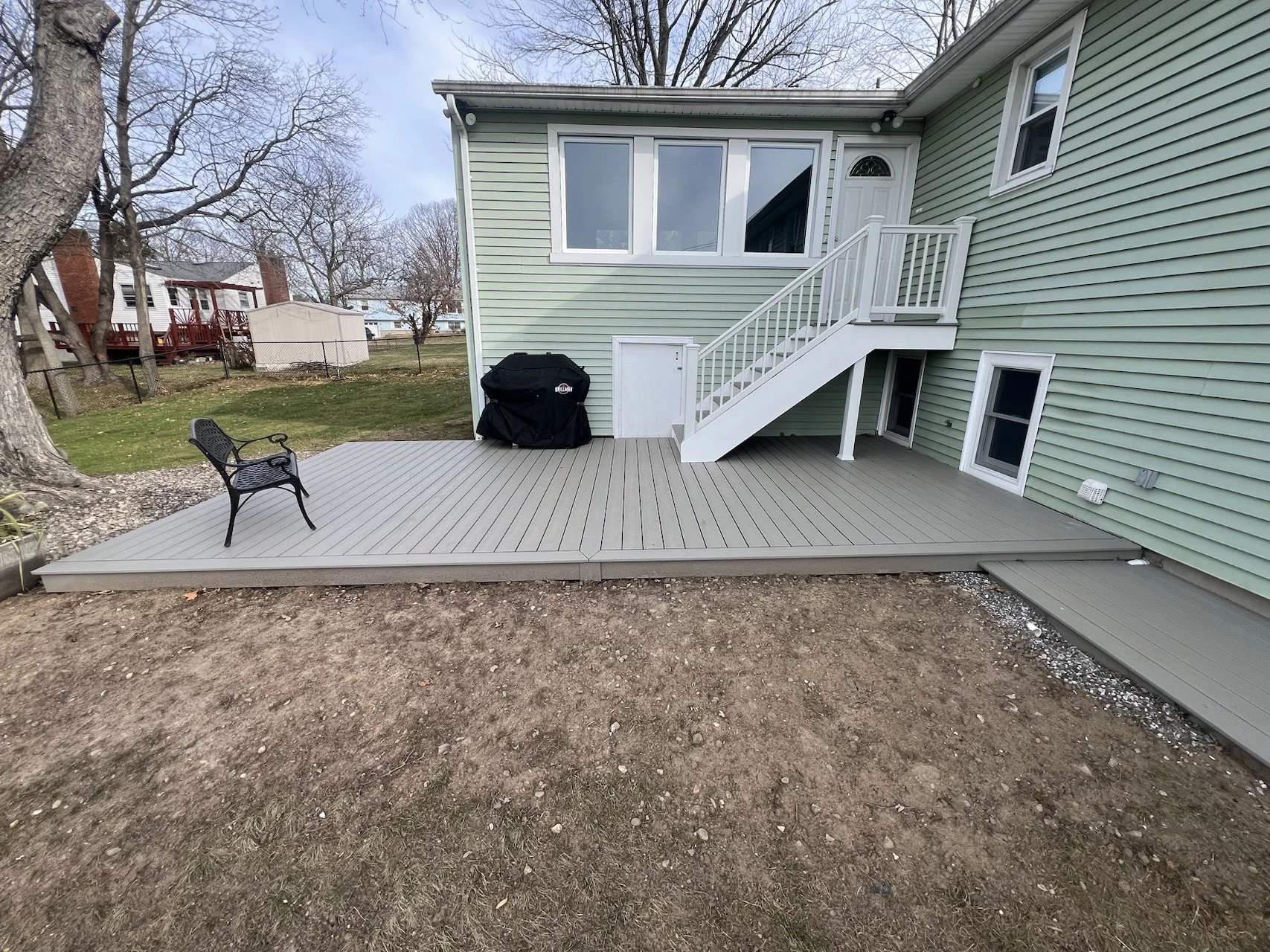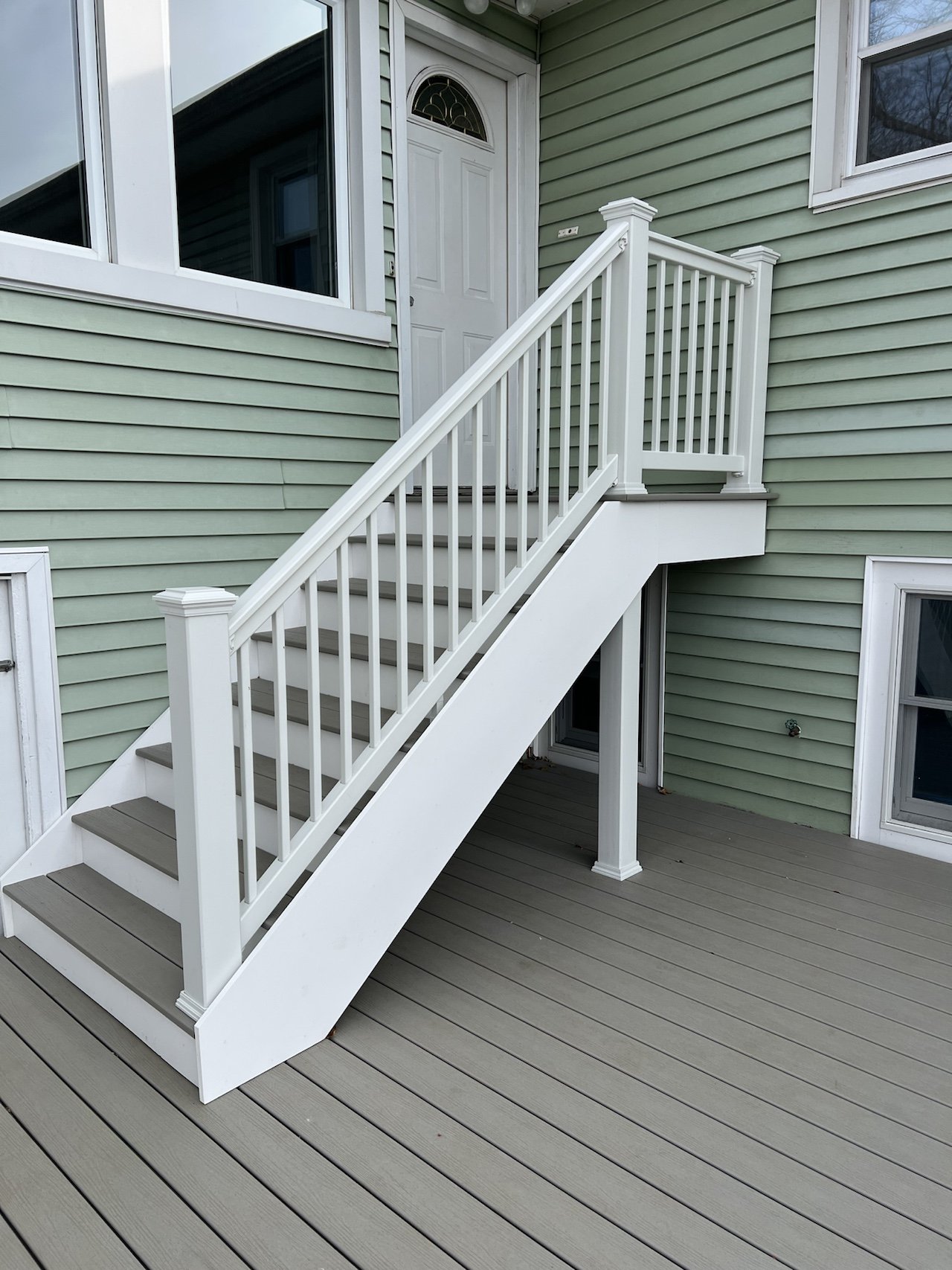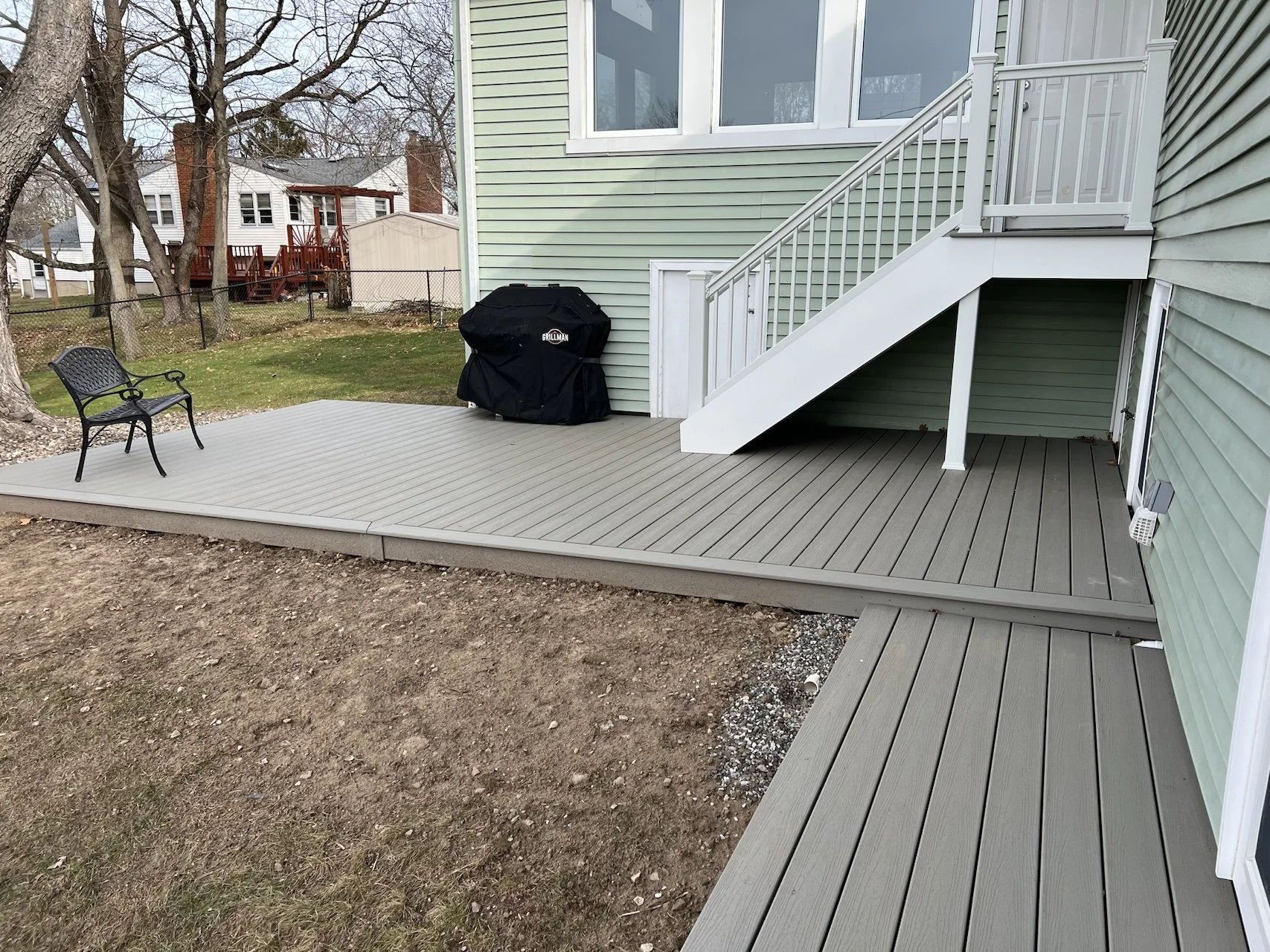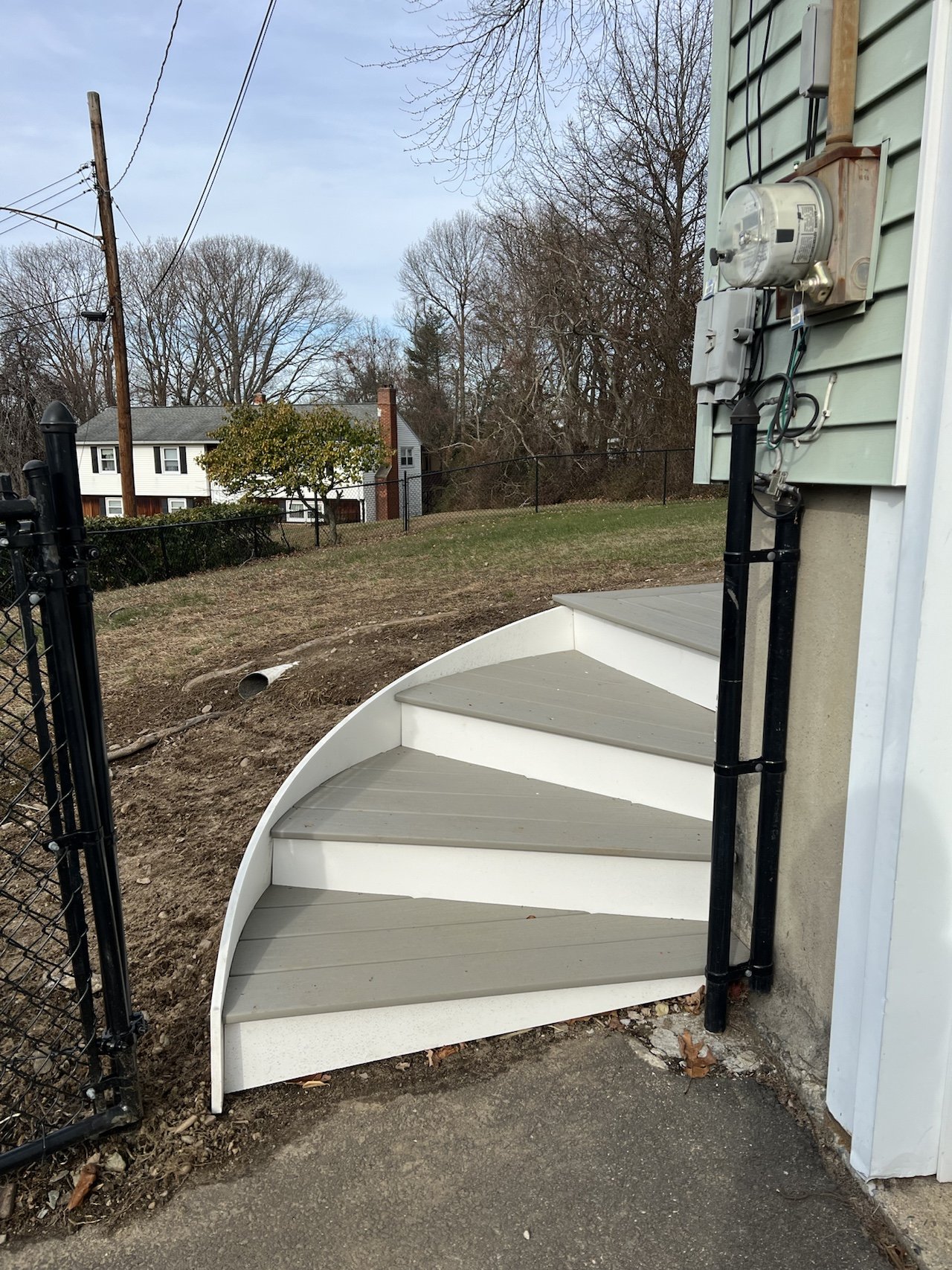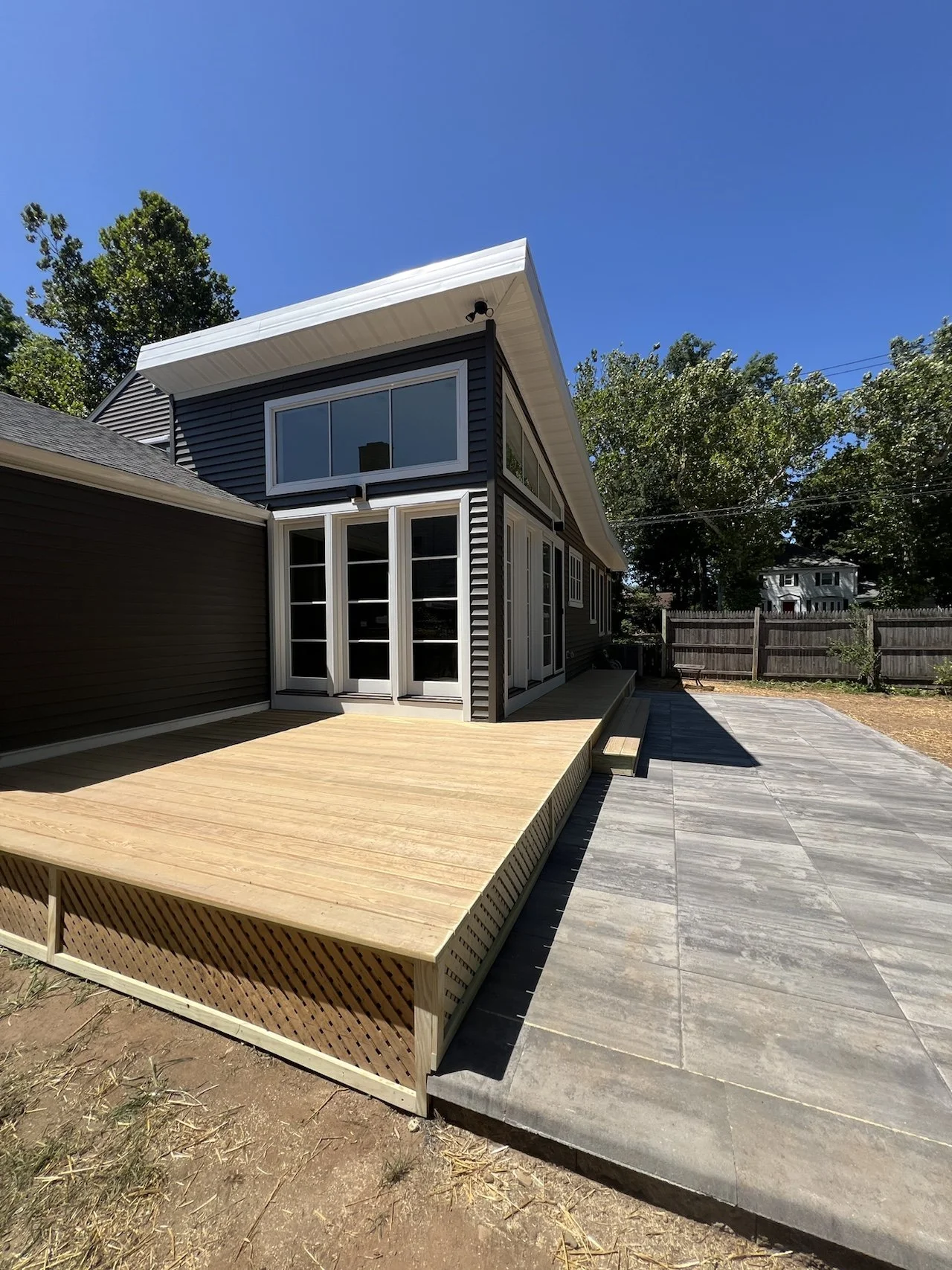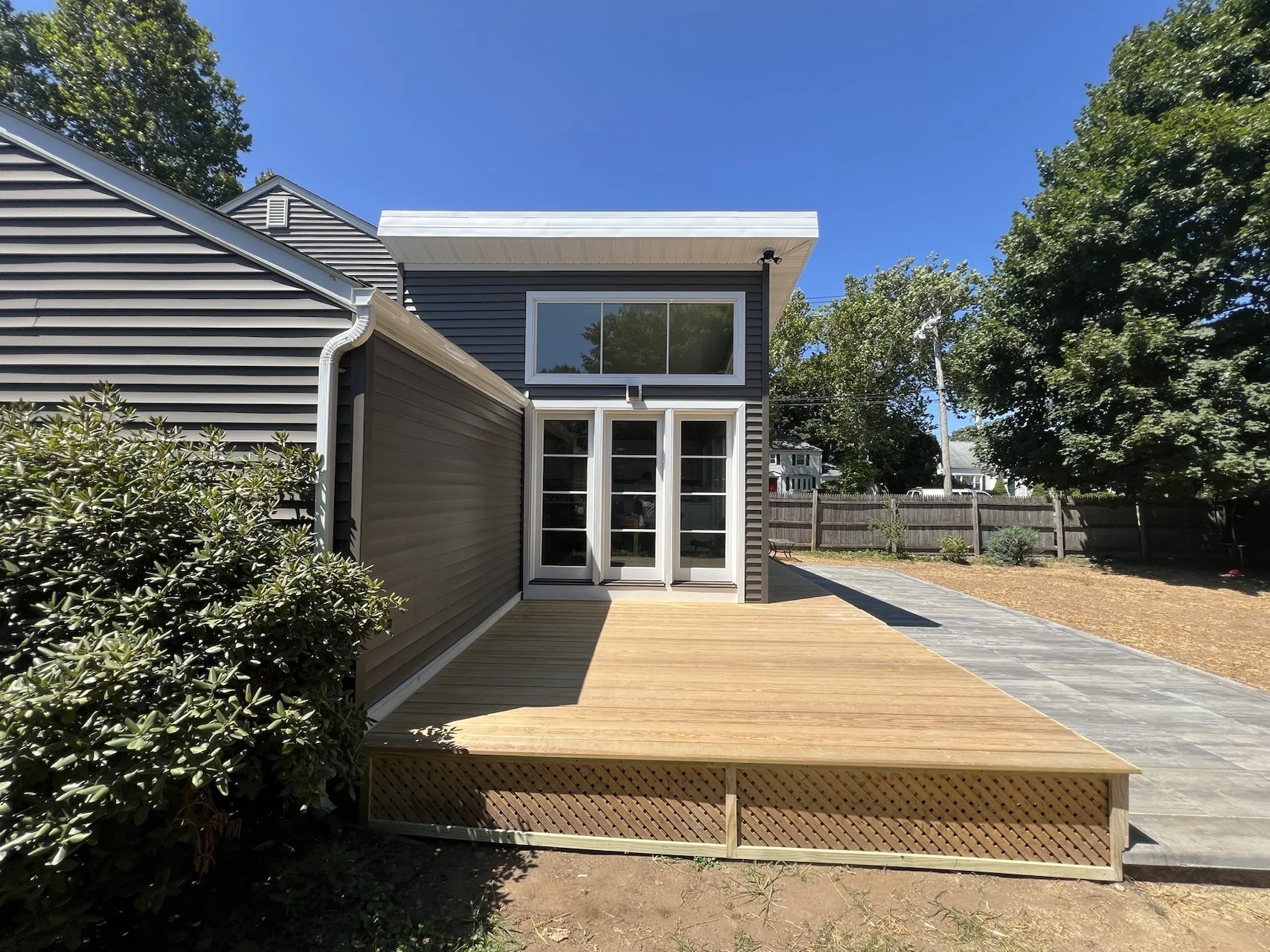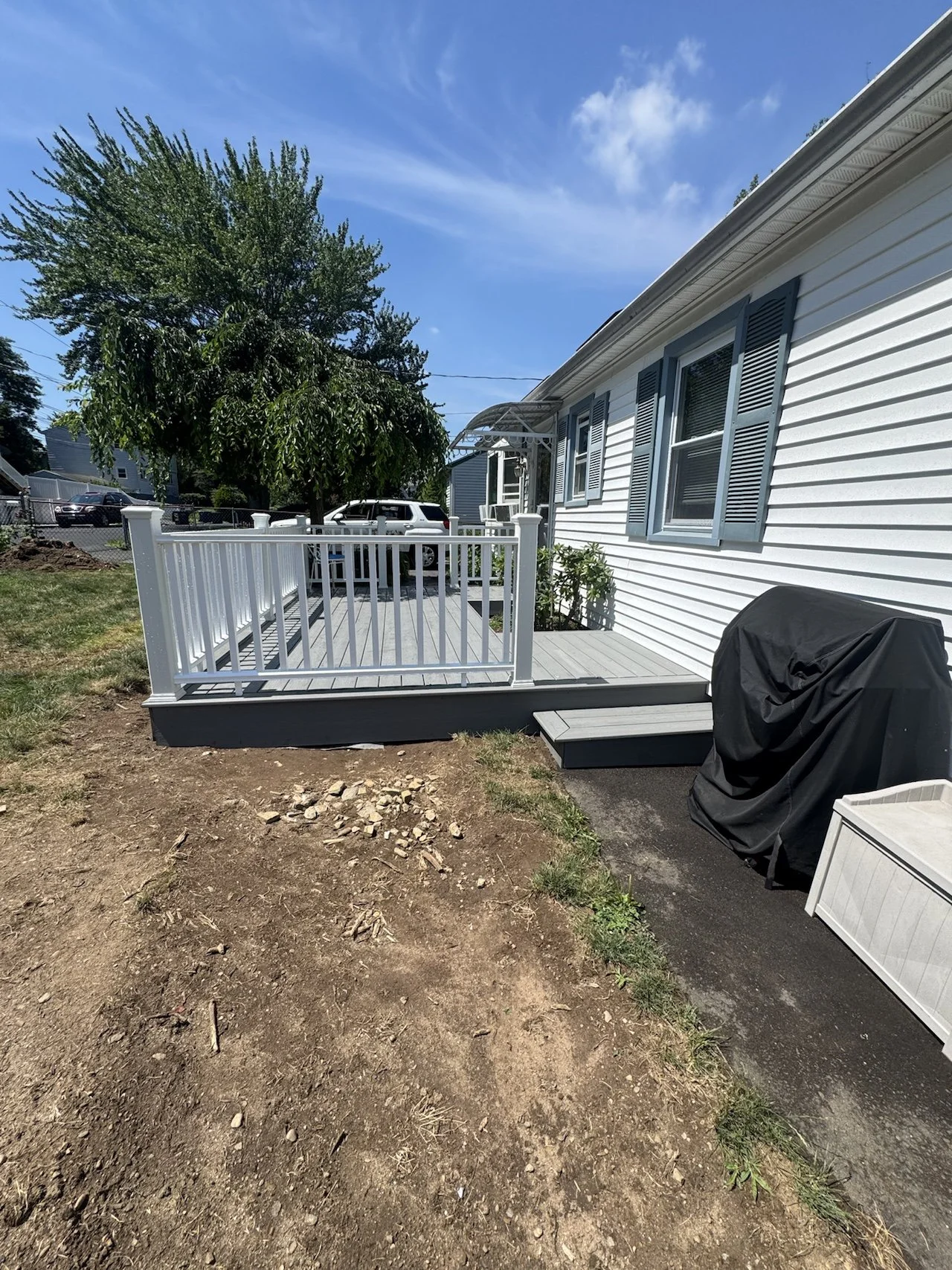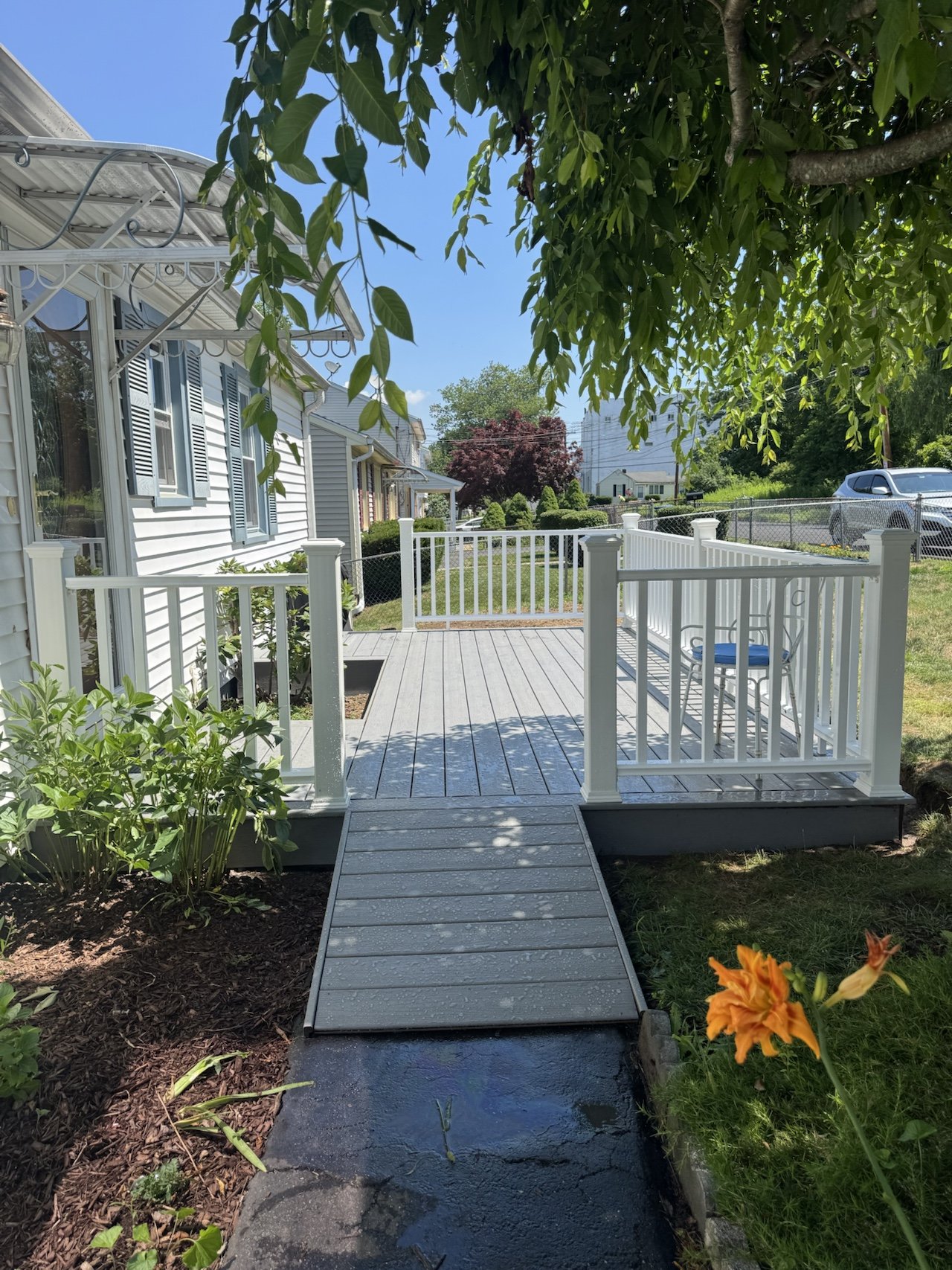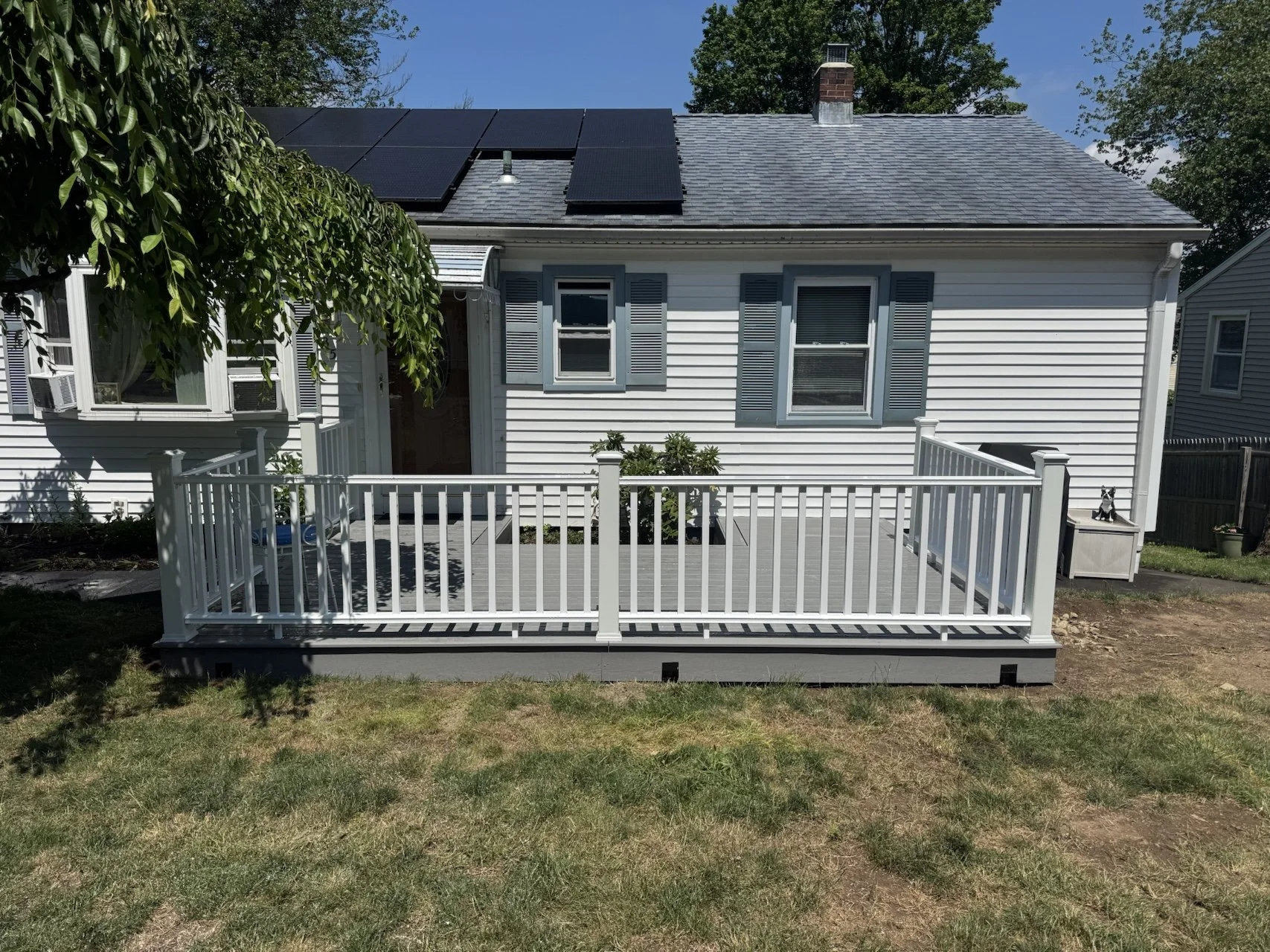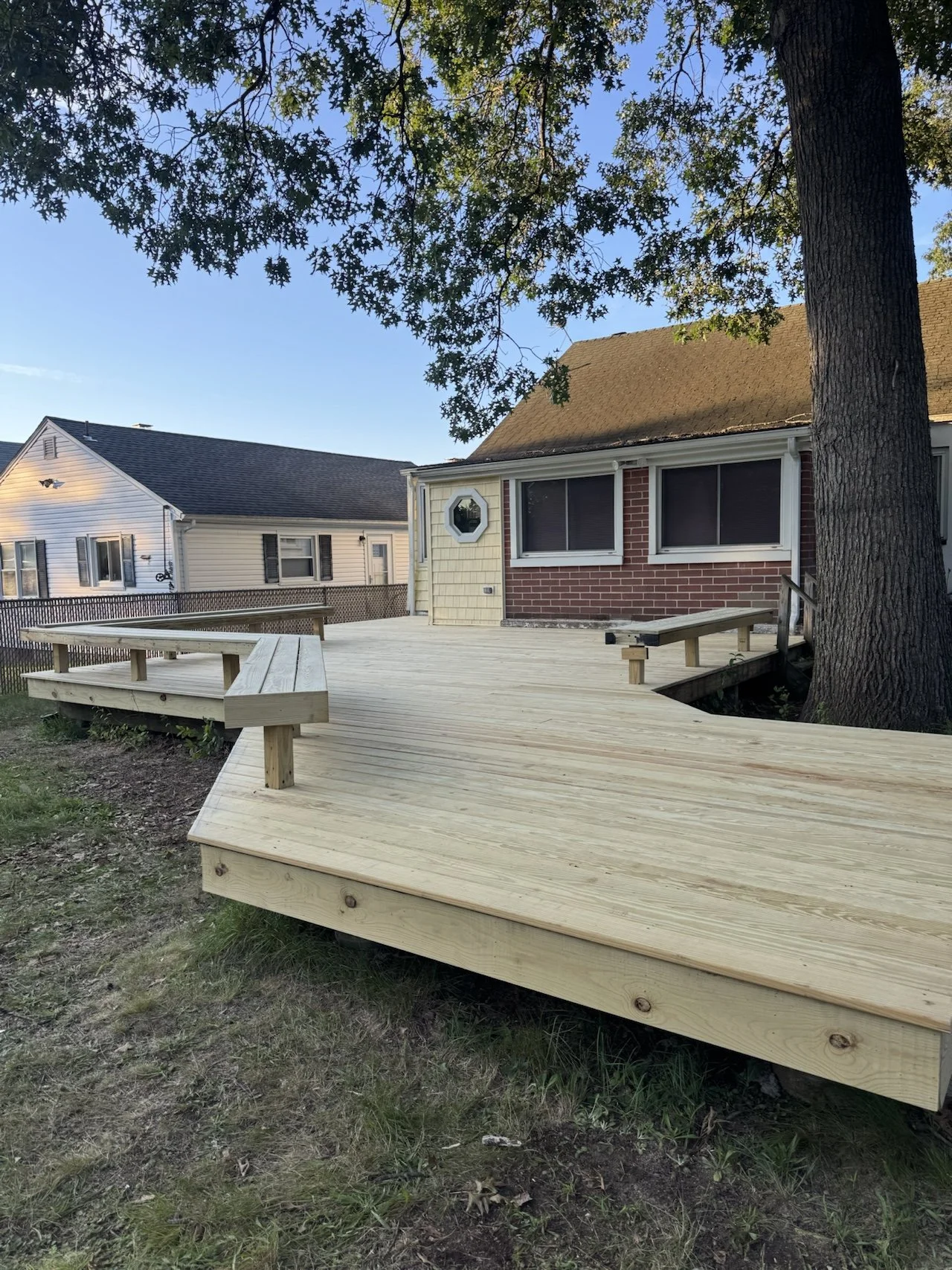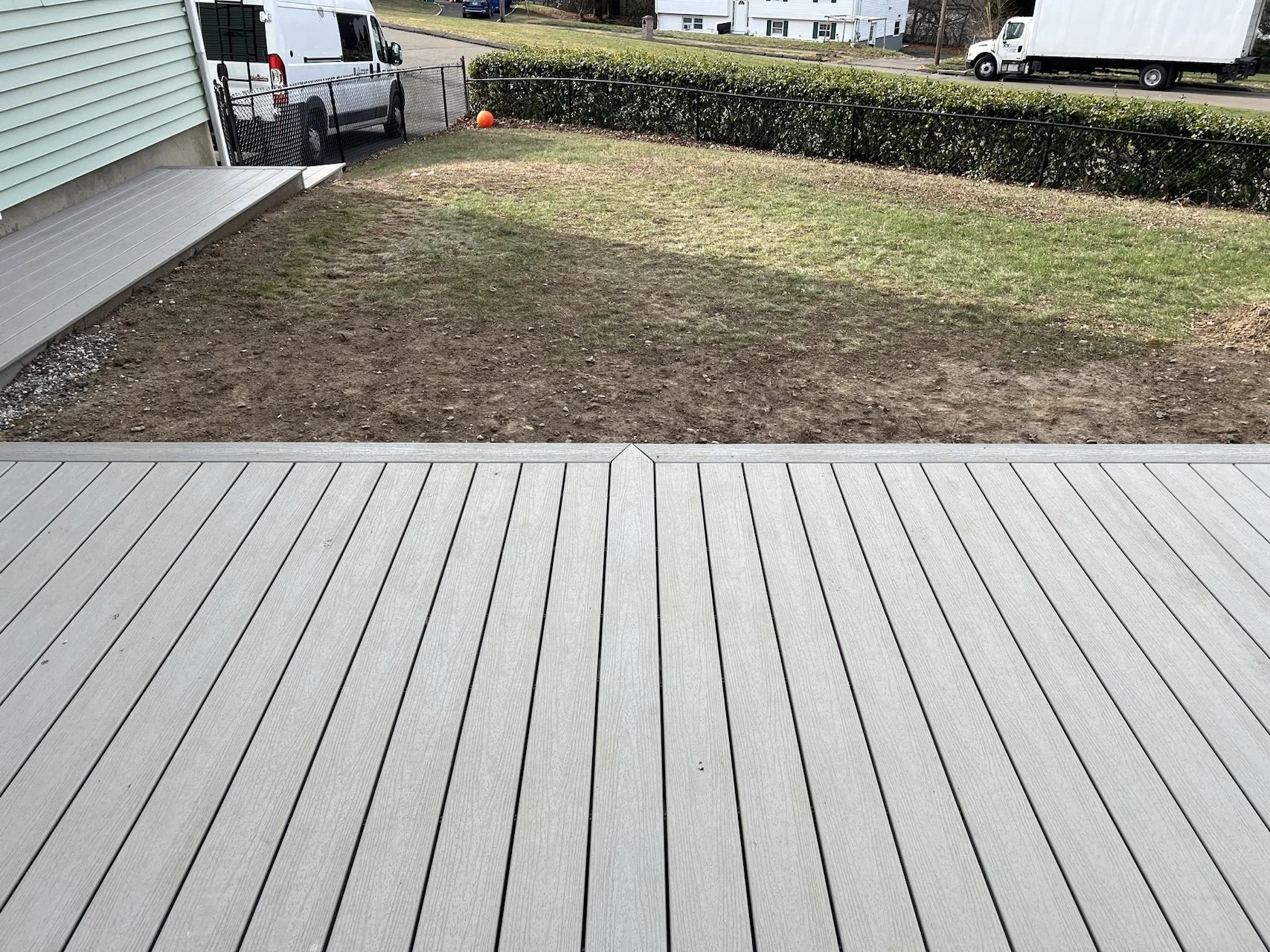
Both wood and composite decking are excellent choices; the right one depends on your priorities. We can build either option. Below is a concise comparison to help you decide, with emphasis on the level of maintenance you can tolerate.
Appearance
Wood: Natural, warm look with unique grain and aging patina. Common species: pressure-treated pine, cedar, redwood, and hardwoods (e.g., ipe).
Composite: Consistent color and texture; designed to mimic wood but with less natural variation. Available in many color options.
Durability and Lifespan
Wood: Can last decades if properly maintained and if you choose a rot-resistant species or hardwood. Susceptible to warping, splintering, rot, and insect damage.
Composite: Highly resistant to rot, insect damage, and splitting. Modern composites can last 25+ years with minimal structural issues.
Maintenance
Wood: Higher maintenance. Requires regular cleaning, sanding, staining or sealing every 1–3 years (frequency varies by species, exposure, and finish). Repairs—boards may need replacement over time.
Composite: Low maintenance. Generally needs only periodic cleaning with soap and water or a pressure wash. Rarely requires sealing or staining. Stains and scratches are less likely but can occur.
Cost
Wood: Lower upfront cost for common species (e.g., pressure-treated). Premium hardwoods are more expensive. Ongoing maintenance adds to lifetime cost.
Composite: Higher upfront cost, but lower maintenance reduces long-term expenses. Warranty coverage often included.
Comfort and Safety
Wood: Can be smoother underfoot when sanded and finished. May splinter over time if not maintained. Surface temperatures may vary.
Composite: Usually splinter-free and slip-resistant if textured. Some composites can get hotter in direct sun; darker colors absorb more heat.
Environmental Considerations
Wood: Renewable if sourced responsibly; pressure-treated lumber includes chemicals. Hardwood harvesting can be environmentally sensitive—look for certified sources.
Composite: Often made from recycled plastics and wood fibers; reduces demand for new lumber. Some composites are more recyclable than others.
Repair and Replacement
Wood: Individual boards can be replaced; repairs are straightforward but require matching material and finish.
Composite: Boards are replaceable, but color matching years later can be an issue. Fewer repairs generally needed.
Which to choose based on maintenance tolerance
If you prefer minimal upkeep: Composite is the better choice. Expect periodic cleaning only.
If you don’t mind regular care and want a natural wood look (with potentially lower upfront cost): Wood can be ideal, provided you commit to staining/sealing and inspections.
If you’d like, we can:
Recommend species or composite brands based on your climate and budget.
Provide a side-by-side cost estimate (initial and projected maintenance) for your specific project.
Schedule a site visit to evaluate sun, drainage, and exposure factors that affect material performance.
Tell us your maintenance preference (low / moderate / willing to commit) and any aesthetic or budget priorities, and we’ll prepare tailored recommendations.